

You’ve probably heard you need to push harder and go faster to see results like weight loss. But for women over 35, the biggest changes might come from slowing down. Zone 2 training, which is low to moderate intensity cardio at about 60 to 75 percent of your maximum heart rate, is gaining attention in research on health, metabolism, and body composition (Chávez-Guevara et al., 2023). To find your Zone 2 heart rate range, start by estimating your maximum heart rate with the formula: 220 minus your age. Then, multiply this number by 0.6 and 0.75 to get the lower and upper ends of your Zone 2 range. For example, a 40-year-old woman would have an estimated maximum heart rate of 180 beats per minute, with a Zone 2 range of 108 to 135 beats per minute. This simple calculation empowers you to tailor your training safely and effectively. Still, the science is more nuanced than a simple “go slow, burn fat” message. Here’s what the research really shows and why that matters if you’re a woman in your mid-thirties or beyond.
What Is Zone 2 And What Does It Actually Do?
Zone 2 is the effort level where your body primarily burns fat for energy, and you can still hold a conversation while exercising. Studies suggest that maximal fat oxidation typically occurs at approximately 48 to 64 percent of VO₂max, which corresponds to 60 to 75 percent of maximum heart rate in many people (Chávez-Guevara et al., 2023). At this intensity, fat contributes the largest proportion of the calories you burn during the session.
However, a recent narrative review in Sports Medicine cautions against treating Zone 2 as uniquely magical. Current evidence does not show that Zone 2 is superior to higher intensities for improving mitochondrial capacity or overall fat-burning capacity in the general population. In some cases, higher-intensity exercise may be more time-efficient for cardiovascular benefits (Storoschuk et al., 2025). That makes context crucial when you’re deciding how much Zone 2 to prioritize in your routine.
The Fat Loss Picture Is More Complex
A key nuance often lost in popular fitness messaging is this: Zone 2 maximizes the percentage of fat used as fuel during a workout, but higher-intensity training increases total energy expenditure and can drive equal or greater fat loss over time.
A systematic review and meta-analysis in the British Journal of Sports Medicine found that high-intensity interval training (HIIT) and sprint interval training (SIT) significantly improved fat oxidation during exercise (mean difference 0.08 g/min), with larger effects in individuals with overweight or obesity (Atakan et al., 2022). HIIT and SIT also slightly outperformed moderate-intensity continuous training for this outcome (Atakan et al., 2022).
The takeaway isn’t that Zone 2 is ineffective. It’s that Zone 2 is one strategic tool in a larger toolkit. For women over 35, the blend of intensities across the week matters more than living exclusively in one zone.
Why Women Over 35 Respond Differently
This is where Zone 2 becomes especially relevant for women. Women show meaningful differences from men in how they metabolize fat during exercise, and those differences influence how training should be programmed. For example, if you are new to structured exercise or have lower fitness, starting with shorter Zone 2 sessions (20 to 30 minutes) and gradually increasing duration or frequency is a safe strategy. If you are in perimenopause or postmenopause, you may benefit from adjusting session frequency or intensity to match how you feel week to week, as hormonal fluctuations can affect recovery and energy. Women with chronic conditions such as cardiovascular disease or diabetes should consult a healthcare provider before beginning or making changes to their program and may need to further individualize heart rate zones or session length. For anyone, tracking how you feel during and after workouts can help personalize your routine: on days when sleep, stress, or energy suggest going easier, Zone 2 offers an effective, lower-stress option, while on strong days, mixing in higher-intensity intervals or longer sessions may be appropriate.
Research indicates that women rely more on fat oxidation at lower intensities, with higher circulating free fatty acids and a greater fraction of energy derived from fat than men during the same relative workload (Costa & Jensen, 2025). Women also tend to have higher mitochondrial density and greater fat-oxidation capacity in skeletal muscle than men of similar fitness levels.
Estrogen plays a central role in this metabolism profile. The American College of Sports Medicine notes that estrogen supports fat utilization by upregulating key mitochondrial enzymes involved in lipid oxidation (Hunter et al., ACSM Consensus Statement). As estrogen levels begin to fluctuate in the mid-thirties and shift more dramatically through perimenopause and postmenopause, these advantages can change, making one’s training approach and recovery even more important.
What the Research Shows for Women Specifically
For women in midlife through postmenopause, regular moderate-intensity aerobic training, including Zone 2, is consistently associated with meaningful health and fitness gains.
A meta-analysis of 26 studies including 518 untrained women found that aerobic exercise of sufficient duration improved maximal oxygen consumption, lowered resting heart rate and systolic blood pressure, and improved lipid profiles, including HDL-C and LDL-C (Zhang et al., 2018). In terms of metabolic health, eight weeks, not four, of moderate-intensity aerobic exercise improved insulin sensitivity by 14.6% in young women, highlighting a realistic time frame for measurable changes (Sellami et al., 2025).
In postmenopausal women, training at an intensity that targets maximal fat oxidation produced robust effects on body composition and cardiometabolic risk markers. A 12-week program at maximal fat oxidation intensity led to reductions in body mass, BMI, total fat mass, visceral trunk fat, and diastolic blood pressure, while increasing HDL cholesterol in overweight or obese older women (Cao et al., 2019). Similarly, a 6-week Nordic walking program performed at lipid oxidation intensity improved body composition, cardiovascular function, and physical performance in previously sedentary women over 55 (Cebula et al., 2020).
Cardiovascular Adaptations With an Important Sex Difference
Evidence summarized in an ACSM consensus statement suggests that while both men and women show comparable early relative improvements in VO₂max, women’s gains may plateau after about three months of consistent training, whereas men may continue improving for up to nine months (Hunter et al., ACSM Consensus Statement). Women also tend to exhibit greater eccentric cardiac remodeling, with increases in ventricular volume, while men show more proportional increases in both ventricular mass and volume (Hunter et al., ACSM Consensus Statement).
This does not mean Zone 2 “stops working” for women after three months. Instead, women over 35 may benefit from periodically adjusting training variables such as volume, intensity mix, and strength work, rather than expecting linear, indefinite gains from an unchanging Zone 2 routine. Adapting your routine isn’t just about intensity; it’s about learning how to exercise smarter after 40 to support your changing physiology.
The Hormonal Case for Sustainable Intensity
For women navigating hormonal shifts in midlife, managing training stress is not just a mindset issue; it’s a hormonal and cardiometabolic one. A review in The Lancet Diabetes & Endocrinology emphasizes that physical activity recommendations for midlife and postmenopausal women should target 150–300 minutes of moderate-intensity or 75–150 minutes of vigorous aerobic activity per week, with clear benefits for cardiometabolic health shown in perimenopausal and postmenopausal populations (Nappi et al., 2022).
Constantly chasing high-intensity sessions can elevate cortisol and worsen symptoms tied to hormonal changes, especially in perimenopause. By contrast, incorporating regular Zone 2 work provides a strong aerobic stimulus without the same systemic stress. In addition to benefits for metabolism and cardiovascular health, Zone 2 training can help manage common perimenopausal symptoms, including sleep disturbances, mood swings, and fatigue, by regulating stress hormones and supporting recovery. This makes it a stable base for a weekly plan that also includes resistance training and time-efficient higher-intensity intervals (Nappi et al., 2022). Beyond the metabolic benefits, the lower physical stress of Zone 2 provides a powerful boost to your psychological well-being. For a closer look at this connection, explore our full guide on how exercise improves mental health.
Current research doesn’t crown Zone 2 as the only answer, but it does support Zone 2 as a powerful, often underused strategy for women over 35, particularly when combined with strength training and selective high-intensity work (Atakan et al., 2022) than other types of training.
How Do I Start?
A practical starting point is three to four Zone 2 sessions per week, lasting 45 to 60 minutes each, at about 60 to 75 percent of your maximum heart rate, combined with 1 to 2 strength sessions and 1 higher-intensity workout if you recover well (Sellami et al., 2025). Give this structure at least eight weeks before judging its impact on your energy, fitness, and body composition, since many metabolic and cardiovascular adaptations unfold over months, not days (Sellami et al., 2025; Cao et al., 2019).
To decide if you are recovering well enough to add challenging workouts, check in regularly with your body. Signs of good recovery include feeling generally energetic during the day, sleeping well at night, not experiencing excessive muscle soreness, and returning to baseline energy within a day after tough sessions. If you notice unusual fatigue, poor sleep, higher-than-usual soreness, or feeling run down, this can be a signal to scale back intensity or add more rest days. Paying attention to these cues will help you tailor your routine safely and make progress over time.
Your metabolism is not broken; it is responding to the signals you send it. Zone 2 training is one of the clearest ways to tell your body to become more efficient at burning fat, protect your heart, and support long-term health as you move through your mid-thirties and beyond. Remember, real progress is possible at any age. Every step you take helps build a healthier, stronger you. No matter where you are starting from, you have the power to improve your fitness and wellbeing, and your efforts truly matter. Stay consistent, believe in yourself, and know that small changes can lead to big results over time.
References
Atakan, M. M., Guzel, Y., Shrestha, N., et al. (2022). Effects of high-intensity interval training (HIIT) and sprint interval training (SIT) on fat oxidation during exercise: A systematic review and meta-analysis. British Journal of Sports Medicine. https://doi.org/10.1136/bjsports-2021-105181
Cao, L., Jiang, Y., Li, Q., Wang, J., & Tan, S. (2019). Exercise training at maximal fat oxidation intensity for overweight or obese older women: A randomized study. Journal of Sports Science & Medicine, 18(3), 413–418.
Cebula, A., Tyka, A. K., Tyka, A., et al. (2020). Physiological response and cardiorespiratory adaptation after a 6-week Nordic walking training targeted at lipid oxidation in a group of post-menopausal women. PloS One, 15(4), e0230917. https://doi.org/10.1371/journal.pone.0230917
Chávez-Guevara, I. A., Amaro-Gahete, F. J., Ramos-Jiménez, A., & Brun, J. F. (2023). Toward exercise guidelines for optimizing fat oxidation during exercise in obesity: A systematic review and meta-regression. Sports Medicine, 53(12), 2399–2416. https://doi.org/10.1007/s40279-023-01897-y
Costa, D. N., & Jensen, M. D. (2025). Effects of sex and obesity on lipid metabolism during low intensity exercise and post-exercise period. Medicine and Science in Sports and Exercise. https://doi.org/10.1249/MSS.0000000000003913
Hunter, S. K., Angadi, S. S., Bhargava, A., et al. (n.d.). The biological basis of sex differences in athletic performance: Consensus statement for the American College of Sports Medicine. American College of Sports Medicine.
Montero, D., Madsen, K., Meinild-Lundby, A. K., Edin, F., & Lundby, C. (2018). Sexual dimorphism of substrate utilization: Differences in skeletal muscle mitochondrial volume density and function. Experimental Physiology, 103(6), 851–859. https://doi.org/10.1113/EP087007
Nappi, R. E., Chedraui, P., Lambrinoudaki, I., & Simoncini, T. (2022). Menopause: A cardiometabolic transition. The Lancet. Diabetes & Endocrinology, 10(6), 442–456. https://doi.org/10.1016/S2213-8587(22)00076-6
Sellami, M., Almuraikhy, S., Naja, K., et al. (2025). Eight weeks of aerobic exercise, but not four, improves insulin sensitivity and cardiovascular performance in young women. Scientific Reports, 15(1), 1991. https://doi.org/10.1038/s41598-025-86306-2
Storoschuk, K. L., Moran-MacDonald, A., Gibala, M. J., & Gurd, B. J. (2025). Much ado about Zone 2: A narrative review assessing the efficacy of Zone 2 training for improving mitochondrial capacity and cardiorespiratory fitness in the general population. Sports Medicine. https://doi.org/10.1007/s40279-025-02261-y
Zhang, Y., Xu, L., Zhang, X., et al. (2018). Effects of different durations of aerobic exercise on the cardiovascular health in untrained women: A meta-analysis and meta-regression. The Journal of Sports Medicine and Physical Fitness, 58(10), 1525–1536. https://doi.org/10.23736/S0022-4707.17.07029-3
About The Author
In stock
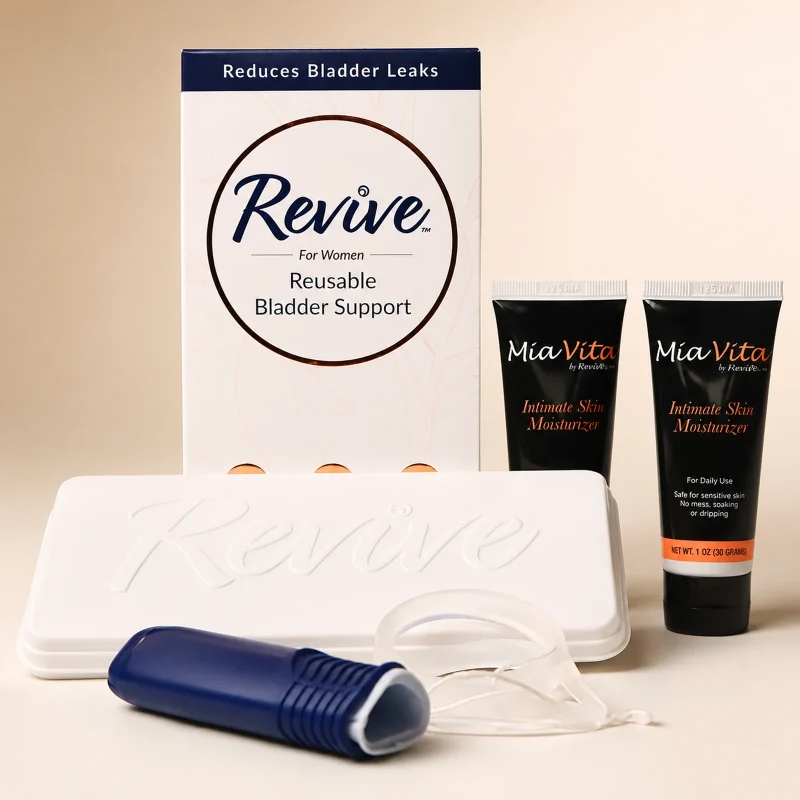
Mia Vita® Gel + Revive® Bladder Support Bundle
Revive is a reusable bladder support clinically shown to prevent light bladder leaks (bladder leakage with physical movement or activity including sneezing, laughing, coughing, etc.), reducing leaks for up to 12 hours. In clinical trials, over 90% of women felt the product was a good fit upon first use. Pair it with Mia Vita® Gel, an intimate skin moisturizer, for easy insertion and to relieve vulvar dryness.
Delivering dependable support and comfort, the bundle contains a 31 day supply of Revive and 2 tubes of Mia Vita® Gel (1 oz. each). Stop light bladder leaks and hydrate your intimate skin today.