
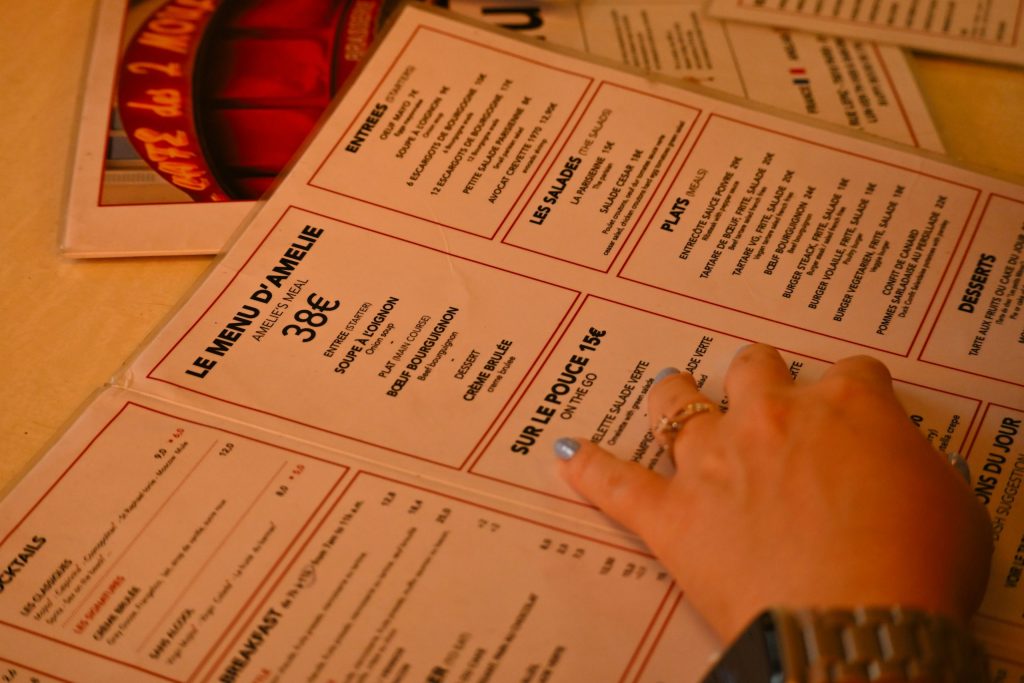
Why Menu Reading Matters
Healthy habits and dining out can coexist. But menus rarely tell the whole story. Learning to read a menu accurately helps you avoid after meal crashes, keeps energy steady, supports your long-term health and gives you more control over your choices when dining out. Most U.S. adults eat restaurant meals weekly. Many dishes way exceed 1,500 calories, and over half of those calories come from sauces, dressings and added fats. Nearly 70 percent of sodium intake in the U.S. comes from food prepared outside the home.
Menu reading is not about removing enjoyment. It is about awareness. It helps you make healthy restaurant choices without guessing, protects long term goals and builds confidence every time you eat out.
Menus Are Marketing: How Language Shapes Your Choice
Menus are built to persuade. They sell a feeling, not an ingredient list. Words like “golden,” “crispy,” or “glazed” sound delicious but usually mean a batter, a sugary glaze or a rich sauce.
Terms such as “tempura,” “smothered,” “butter style,” or “loaded” often point to extra flour, cheese, cream or oil. These phrases grab your appetite, but they also give clues about what has been added to the food. Restaurants rely on emotional language. That is why verbs matter. “Roasted,” “grilled,” or “baked” usually mean fewer added ingredients and a lighter style of cooking.
Even small wording shifts matter. A salad “drizzled with dressing” or vegetables “tossed in butter” may contain more oil than you expect. The goal is not to be scared of the menu. The goal is to understand what those words really mean. Once you start spotting these signals, you naturally make healthier restaurant choices without feeling restricted. The problem is not dining out. The problem is when the wording hides what is really on your plate.
Your Healthy Menu Checklist (Plus What to Ask)
Once seated, start with a simple plan. Look for protein first. Then scan vegetables and other plant foods. Last, check how the dish is cooked and what fats or oils are used. This order keeps you focused instead of pulled in by tempting menu language.
Here is a quick checklist for dining out:
• Choose protein-first dishes such as chicken, fish, steak or plant-based alternatives.
• Look for produce density because more color usually means more fiber. see FemmePharma’s guide to boosting meal nutrition.
• Focus on preparation words. “Roasted,” “grilled,” or “seared” often signal minimal coatings.
• Notice fat sources such as avocado, nuts or olive oil which are easy to recognize.
• Treat sauces as unknowns until you ask about them. Unknowns are not barriers. They are simply a cue to gather information.
Asking questions helps you get what you want without making ordering complicated. These short scripts are polite and effective:
• “How is this cooked?”
• “What oil do you use for grilling or roasting?”
• “Could I have the dressing or sauce on the side?”
• “Is there sugar or flour in the marinade?”
• “Can I swap the side for vegetables?”
Most restaurants are used to these requests. Asking helps your body and rarely slows down service.
Decoding the Menu by Section
Menus follow patterns, and each section has its own traps and easy wins. Understanding this makes dining out feel simpler.
Appetizers and Starters
Starters set the tone. Soups, grilled skewers, simple seafood options and small salads with lean proteins are usually reliable. Words like “fried,” “sticky,” “crispy,” or “glazed” suggest coatings or added sugar. These are prompts to ask one more question, not automatic nos.
Mains and Entrées
Mains form the structure of the meal. Bowls with protein, vegetables and slower carbs work well for sustained energy. Steak, roasted chicken, grilled fish, turkey burgers or tofu bowls often provide balance. If you see “encrusted,” “fried,” or “smothered,” ask about coating and sauce ingredients.
Salads/Vegetables
Vegetables help keep blood sugar steadier when you’re dining out, but the way a dressing is described can change everything. Phrases like “tossed in dressing,” “creamy Caesar,” or “sweet vinaigrette” often mean extra sugar or seed oils. Ask for the dressing on the side and add some protein so the salad becomes a satisfying full meal.
Sides
Sides allow easy improvements. Swap fries for extra vegetables or a side salad. Choose baked potatoes instead of loaded mash. Ask for butter or olive oil rather than flavored spreads. Restaurants often have real butter even when it is not listed.
Desserts
Dessert doesn’t have to be off limits. You can share one, choose a fruit-based option or skip it and enjoy a simple coffee or tea instead. These choices are kinder to your blood sugar and energy than a heavy, sugary dessert on top of a big meal.
Sauces, Oils and Drinks: The Hidden Extras
Uncertainty often comes from sauces, blended oils and sweetened drinks because they are less visible. Sauces may contain sugar, emulsifiers, thickening starches or mixed oils. Many restaurants default to seed oils for stability and cost. If you want more control, ask for butter or olive oil. Many grilled dishes can be cooked in butter on request. Olive oil is often available even if not highlighted.
Sweetened iced teas, sodas, mocktails, blended coffees and milkshakes add sugar without satiety. These drinks can spike energy and increase thirst or cravings later.
Better choices include sparkling water, mineral water, unsweetened iced tea, black coffee, espresso after eating or kombucha (ask for low sugar) if offered. A small dry wine is usually a gentler option than many cocktails.
The Plate Re-balance Method
Restaurant meals are often big, and the food usually arrives already piled on the plate. You can still use a simple mental guide. Aim for something like this in your mind: about half your meal from vegetables, a quarter from protein and a quarter from starches or richer foods. That might mean eating more of the vegetables and protein, leaving some fries or bread, or boxing part of the meal to take home.
This “plate math” is not a diet rule. It is a calm way to decide what to enjoy now and what to leave, so dining out still fits your long-term health goals.
Knowing how to read a menu makes dining out feel more relaxed. You don’t have to eat perfectly to make healthy restaurant choices. Most of the time, asking one good question or making one small change is enough.
Keep these principles in mind:
• Lead with protein.
• Add color for fiber.
• Choose grilled, roasted or baked when possible.
• Ask about sauces.
• Ask for small changes that work better for you.
Once you know how to decode a menu, dining out starts to support your lifestyle instead of challenging it. The more you practice, the more natural it feels.